Election 2026

More election information:

Virginia Special Notice:

Vote NO on Question 1

U.S. Senate, Virginia, 2026

Seal of the U.S. Senate

In the race to represent the Commonwealth of Virginia in the United States Senate, incumbent Senator Mark Warner (D-VA) is challenged by Bert Mizusawa (R). Warner was first elected to the Senate in 2008 and is in his third term.

Each of the fifty states have two seats in the Senate for a total of one hundred seats. There is no representation, voting or non-voting, for U.S. territories or the District of Columbia. Senators serve six-year terms, and elections are held on a staggered schedule with classes of roughly one-third of the Senate up for election every two years. This year, the thirty-three seats of the second class are in contention.

The Republican Party holds a 53-45 seat majority over the Democratic Party. There are two independent members who caucus with the Democrats. Both of Virginia’s Senate seats are currently held by Democrats.

U.S. House, Virginia, 2026

Seal of the U.S. House of Representatives

All seats in the U.S. House of Representatives are up for election every two years. There are 435 seats representing each of the fifty states in rough proportion to their population as recorded in the most recent national census. There are six non-voting delegate seats representing U.S. territories and the District of Columbia.

The Republican Party currently holds a 218-214 majority over the Democratic Party. There is one independent member who caucuses with the Republicans and two seats are vacant. Virginia has eleven seats, with six held by Democrats and five by Republicans.


Tenth District

In the race to represent Virginia’s 10th District in the United States House of Representatives, incumbent Representative Suhas Subramanyam (D-VA 10th) is challenged by Dave Beckwith (R) and Ahsen Malik (I). The 10th District encompasses Fauquier County, Loudoun County, Rappahannock County, the cities of Manassas and Manassas Park, and parts of Fairfax and Prince William counties.

Virginia Questions 2 and 3, 2026

Seal of Virginia

Citizens of Virginia will be voting on three proposed constitutional amendments this year. This endorsement article considers only the second and third. An endorsement article addressing the first, which is especially important and deserves extra attention and analysis, is published separately.

There are two methods for amending the Constitution of Virginia described in Article XII. These come to us through the Section 1 method, which is most commonly used: The proposal is passed by both houses of the General Assembly, and then, after an intervening House of Delegates election, passed again, then presented to the voters in a referendum.

Loudoun Referendums, 2026

Seal of Loudoun County

Citizens of Loudoun County, Virginia, will be voting on three bond referendums this year.

Under Article VII, Section 10, of the Constitution of Virginia, local governments must obtain voter approval through referendums to issue general obligation bonds. Bonds are debt; the issuing government sells them to investors and receives an immediate influx of cash, but, like a bank loan, those funds must be repaid over time with interest.

Generally, I believe governments should only incur public debt when:

  • a project is necessary for the public good,
  • its benefits will far outlast the repayment period, and
  • it cannot be reasonably funded through other means.
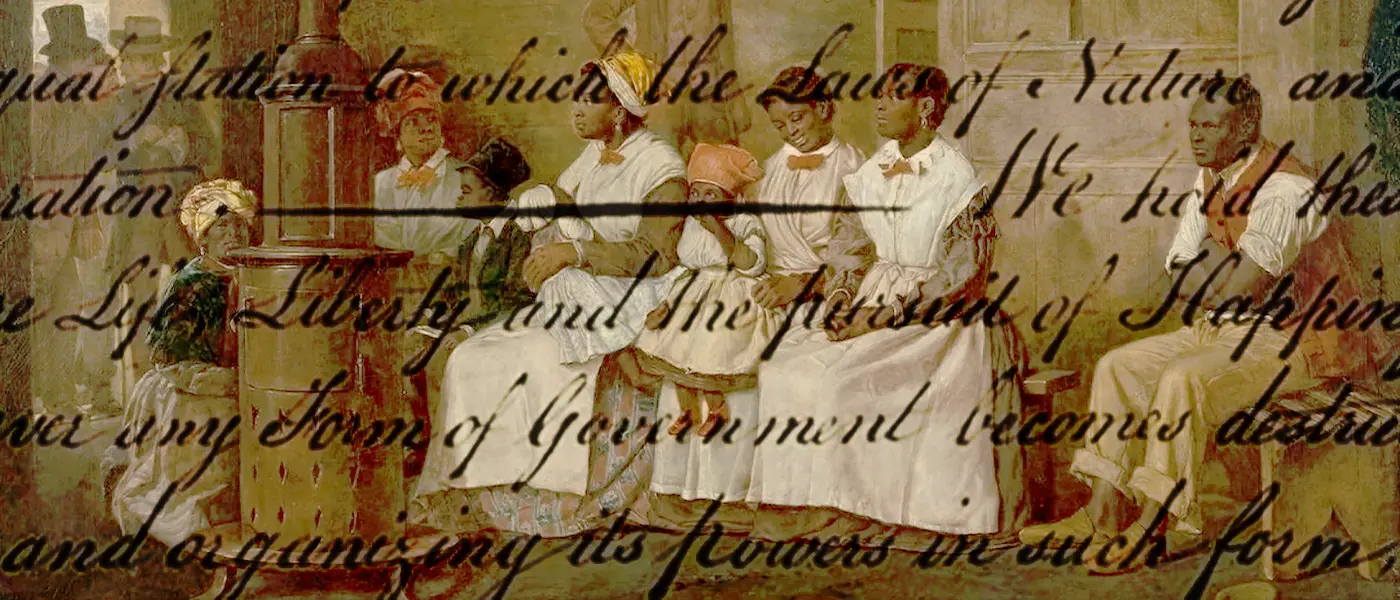
Slaves Waiting for Sale (Eyre Crowe)

Citizens of Virginia will be voting on three proposed constitutional amendments this year. This endorsement article considers only the first, which is especially important and deserves extra attention and analysis. An endorsement article addressing the second and third will be published separately.

There are two methods for amending the Constitution of Virginia described in Article XII. This one comes to us through the Section 1 method, which is most commonly used: The proposal is passed by both houses of the General Assembly, and then, after an intervening House of Delegates election, passed again, then presented to the voters in a referendum.

Scott Bradford is a writer and technologist who has been putting his opinions online since 1995. He believes in three inviolable human rights: life, liberty, and property. He is a Catholic Christian who worships the trinitarian God described in the Nicene Creed. Scott is a husband, nerd, pet lover, and AMC/Jeep enthusiast with a B.S. degree in public administration from George Mason University.